Start with what the handgun is for
The best first handgun depends on the job. Be honest about how you’ll use it most:
- Home defense. Size matters less. A full-size or mid-size pistol is usually easier to shoot well.
- Concealed carry. A smaller gun is easier to carry all day, but small guns are often harder to shoot accurately and have more felt recoil.
- Target shooting and learning. A larger gun, or a .22 LR pistol, makes practice more pleasant and cheaper.
Many people try to find one gun that does everything. A mid-size pistol is often a reasonable middle ground.
How should a handgun fit your hand?
Fit affects control, accuracy and comfort. With the gun unloaded and pointed in a safe direction, check:
- With a firm grip high on the backstrap, can the pad of your index finger reach the trigger without shifting your hand?
- Can you reach the magazine release and slide stop without major changes to your grip?
- Can you work the slide? Some slides are stiffer than others. Technique helps, but it’s worth testing.
- Does your hand wrap the grip comfortably, without your pinky hanging off or your fingers crowded?
Many pistols come with interchangeable backstraps or grip panels to fine tune fit.
What caliber should a first handgun be?
| Caliber | Why people pick it | Things to know |
|---|---|---|
| .22 LR | Very low recoil, cheap practice | Great for learning. Many people want something larger for defense. |
| .380 ACP | Small guns, lighter recoil than 9mm in the same size gun | Ammo usually costs more than 9mm. |
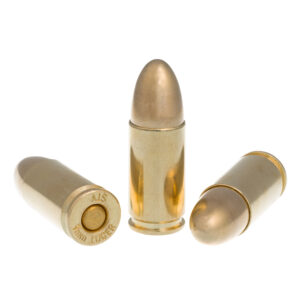
| 9mm | Widely available ammo, manageable recoil, lots of gun choices | A very common choice for a first defensive handgun. |
| .40 S&W, .45 ACP | Larger bullets | More recoil and cost per round, usually fewer rounds per magazine. |
Practice matters more than caliber for most new shooters. Pick something you can afford to shoot often and control well.
Pistol or revolver?
Semi-automatic pistols hold more rounds, are flatter to carry, and are quick to reload with a spare magazine. You’ll need to learn to clear malfunctions and work the slide.
Revolvers are simple to load, check and operate. They hold fewer rounds, are slower to reload, and small revolvers often have heavy triggers and sharp recoil.
Features to look at
- Sights you can see clearly. Some guns are cut for an optic.
- Trigger. Consistent and predictable matters more than light.
- Safety. Some models have a manual safety, some don’t. Either way, safe handling comes from habits, not a lever.
- Parts and accessories. Popular models have more holsters, magazines and sights available.
- Reliability. A defensive handgun has to work every time with the ammo you use.
Try before you buy
Holding a gun at a counter tells you about fit. Shooting it tells you about recoil, trigger and how well you actually hit. If you can, rent a few models at a range, or shoot a friend’s under supervision, before you decide. Ask to handle several guns side by side.
Budget for more than the gun
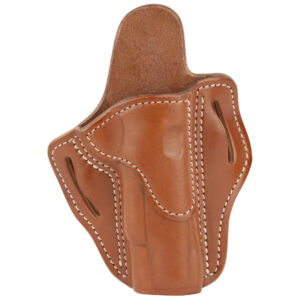
- A quality holster that covers the trigger guard, if you’ll carry.
- A lock box or safe, especially with kids in the house.
- Practice ammo and a spare magazine.
- A cleaning kit. See how to clean a gun.
- Training.
Questions to ask at the counter
- Can I see this next to a smaller and a larger model?
- How many magazines come with it, and what do extras cost?
- Are holsters and replacement sights easy to find for it?
- What does the manufacturer’s warranty cover?
- How do I field strip it for cleaning?
Take your time. A good counter person will let you handle several guns and won’t rush you toward one model.
Get training
A basic class teaches safe handling, loading and unloading, grip, stance and sight use. Follow the core safety rules every time: treat every gun as loaded, keep the muzzle pointed in a safe direction, keep your finger off the trigger until you’re ready to fire, and know your target and what’s beyond it.
What you need to buy a handgun
Federal law bars licensed dealers from selling a handgun to anyone under 21. You’ll bring a valid ID with your current address, fill out ATF Form 4473 and pass a background check. See buying a gun in Indiana and Form 4473 explained. If you find the right gun online, an FFL transfer through us is $35 for the first firearm.
Common Questions
What is the best caliber for a first handgun?
Many new shooters choose 9mm because ammo is widely available and recoil is manageable in most full-size and mid-size pistols. A .22 LR is excellent for learning fundamentals.
Is a small handgun better for beginners?
Not usually. Small guns are easier to carry but often harder to shoot accurately and have more felt recoil. Many beginners do better learning on a mid-size or full-size gun.
How old do you have to be to buy a handgun?
Federal law bars licensed dealers from selling a handgun to anyone under 21.
Should I buy a revolver or a pistol first?
Both work. Pistols hold more rounds and reload faster. Revolvers are simple to operate but often have heavier triggers. Try both if you can.
Sources
This guide is general information, not legal advice. Laws and court rulings change; check current law or talk with an attorney about your situation.