

What does FFL transfer mean?
FFL stands for Federal Firearms License. A licensed dealer holds one. An FFL transfer is the process of moving a firearm into your hands through a licensed dealer instead of straight from the seller. The gun ships to the dealer, the dealer logs it into their records, and then the dealer transfers it to you after the same paperwork and background check you’d do for any gun bought off the shelf.
People also call this an FFL-to-FFL transfer, because the seller is often another dealer or an online retailer that ships from its own license to the receiving dealer’s license.
Why do you need an FFL transfer?
Federal law generally lets an unlicensed person acquire a firearm only in their own state. If you buy from an out-of-state source, ATF says the transfer has to go through a licensed dealer in your state of residence, where you complete Form 4473 and a background check (18 U.S.C. 922(a)(3) and 922(b)(3)). That is why an online store won’t ship a gun to your front door. It ships to a dealer you pick.
You’ll use an FFL transfer when you:
- Buy a gun from an online retailer or auction site.
- Buy from a private seller who lives in another state.
- Buy a handgun while traveling out of state (it has to be shipped to a dealer in your home state).
- Are given a gun by someone who lives in another state.
How an FFL transfer works, step by step
- Pick your receiving dealer first. Call or check their website to confirm they accept transfers, what they charge, and their hours.
- Buy the gun. At checkout, choose that dealer as the ship-to location. Many big retailers keep a list of dealers on file.
- License copy goes to the seller. Before a dealer ships to another dealer, federal rules require the seller to verify the receiving dealer’s license, usually with a certified copy of it (27 CFR 478.94). If the seller doesn’t already have it, ask your dealer to send it.
- The gun arrives and is logged in. The dealer records it in their acquisition and disposition records. Most shops call or text you when it’s ready.
- Visit the shop with valid ID. You need a government-issued photo ID with your name, date of birth and current address.
- Fill out Form 4473 and pass the background check. The dealer runs a NICS check. Indiana dealers contact the FBI’s NICS system directly.
- Pay the transfer fee and take your gun home.
What do you need to bring to pick up a transfer?
- A valid government-issued photo ID. If it doesn’t show your current address, ATF allows extra government-issued documents, such as a vehicle registration, to prove residence.
- Your order number or seller info, so the dealer can match the gun to you.
- Payment for the transfer fee.
At our shop, buyers bring a valid Indiana driver’s license or ID with their current address.
Who can receive an FFL transfer?
The same federal rules apply as for buying a gun in the store. You can’t be a prohibited person, and you must meet the age rules. Federal law bars a dealer from transferring a handgun to anyone under 21 or a rifle or shotgun to anyone under 18. If you order a handgun online at 19, the dealer can’t release it to you.
You also have to be the actual buyer. Buying a gun for someone who gave you the money is a straw purchase. Read more in our guide on gifting a gun and straw purchases.
What if the background check is delayed or denied?
A NICS check comes back proceed, delayed or denied. Most are quick, but a delay can hold your transfer for days. If you’re denied, the dealer can’t give you the gun, and you can appeal through the FBI. Our guide to background check delays covers what to expect. Ask your dealer ahead of time what happens to a gun if you can’t pass, because return shipping and restocking costs are usually on the buyer.
How much does an FFL transfer cost?
Each dealer sets its own fee. Some charge per gun, some charge more for NFA items or for guns bought elsewhere.
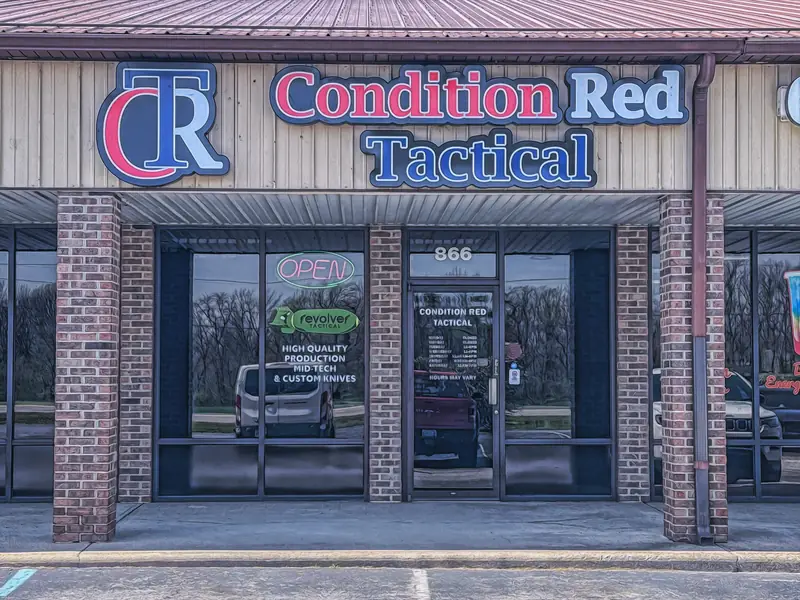
At Condition Red Tactical in Greenfield, an FFL transfer costs $35 for the first firearm, $25 for each additional item in the same transfer, and $50 for NFA items not bought through us. Details are on our FFL transfers page.
For a closer look at what drives the price, see FFL transfer fees explained.
Tips for a smooth transfer
- Talk to the dealer before you buy, not after the gun is in a box.
- Make sure the gun is legal for you to own and for the dealer to transfer.
- Put your full name on the order exactly as it appears on your ID.
- Pick up within the dealer’s holding window. Some shops charge storage after a set time.
Laws and agency guidance change. This guide is general education, not legal advice. If you’re unsure about your situation, ask the shop before you buy or talk to an attorney.
Common Questions
Can a gun be shipped directly to my house?
Generally no. When you buy from an out-of-state source, federal law requires the gun to go to a licensed dealer in your state of residence, where you complete Form 4473 and a background check.
How long does an FFL transfer take?
Most of the wait is shipping. Once the gun arrives and is logged in, the paperwork and background check usually take a short visit unless your NICS check is delayed.
Is an FFL transfer the same as FFL to FFL?
They describe the same thing from different angles. FFL to FFL means the seller's dealer ships to your dealer, and the transfer is the step where your dealer hands the gun to you.
How much is an FFL transfer at Condition Red Tactical?
$35 for the first firearm, $25 for each additional item in the same transfer, and $50 for NFA items not bought through us.
Sources
- ATF: How may an unlicensed person receive a firearm purchased from an out-of-state source?
- 27 CFR 478.94: Sales or deliveries between licensees
- ATF: Minimum Age for Gun Sales and Transfers
- ATF: Supplemental government-issued documentation on Form 4473
- ATF open letter to Indiana FFLs on NICS procedures
- ATF: Form 4473 Firearms Transaction Record Revisions
This guide is general information, not legal advice. Laws and court rulings change; check current law or talk with an attorney about your situation.