
What does suppressor mean?
A suppressor is a device that attaches to the muzzle of a firearm and reduces the sound of the shot. “Silencer” and “suppressor” mean the same thing. Federal law uses “silencer,” defined in 18 U.S.C. 921 as any device for silencing, muffling or diminishing the report of a portable firearm, including any part intended only for making one. Shooters and manufacturers usually say “suppressor” because it’s more accurate: the gun gets quieter, not silent.
Legally, a suppressor is a firearm. It has a serial number, and buying one from a dealer requires a background check.
How does a suppressor work?
When a cartridge fires, burning powder creates high-pressure gas that pushes the bullet down the barrel. When the bullet leaves the muzzle, that gas escapes all at once. The sudden release is most of what you hear as a gunshot.
A suppressor gives the gas somewhere to go first. Inside the tube is a series of chambers and baffles (or a single machined core called a monocore). The gas:
- Expands into a larger space, which drops its pressure.
- Swirls and bounces through the baffles, which slows it down.
- Cools as it spreads through the metal.
- Exits over a longer fraction of a second instead of in one sharp burst.
The bullet passes straight through a hole in the center of each baffle. Nothing touches it if the suppressor is mounted correctly.
How quiet is a suppressor, really?
Here are the numbers from published sources:
| Measurement | Typical range | Source |
|---|---|---|
| Unsuppressed small-arms gunshot | About 140 dB (.22 rifle) to above 175 dB (.30 caliber with a muzzle brake), peak | CDC/NIOSH study |
| Reduction at the shooter’s ear | About 17 to 24 dB peak in NIOSH testing | CDC/NIOSH study |
| Average reduction cited by industry | About 20 to 35 dB | American Suppressor Association |
| Typical suppressed gunshot | About 130 to 140 dB | American Suppressor Association |
| Level for instant hearing damage | 140 dB and above | American Suppressor Association; NIOSH guidance |
For perspective, 20 to 35 dB is roughly what earplugs or earmuffs give you. A suppressed rifle is still about as loud as a jackhammer or a jet taking off nearby. NIOSH researchers concluded suppressors are a useful tool but that shooters should still wear hearing protection, because repeated suppressed shots can still damage hearing.
Why subsonic ammo matters
A suppressor only quiets the gas. It can’t do anything about a bullet traveling faster than sound. The speed of sound is about 1,125 feet per second at sea level (it varies with temperature). A supersonic bullet makes a sharp crack along its whole flight path, like a tiny sonic boom.
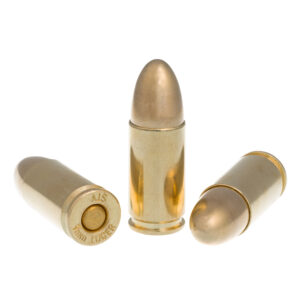
Subsonic ammunition keeps the bullet below the speed of sound. That’s why the quietest setups pair a suppressor with subsonic loads: .22 LR subsonic, 9mm 147-grain, .45 ACP (which is naturally subsonic) and .300 Blackout subsonic are common examples. The NIOSH study found lower noise levels when suppressors were used with low-velocity ammunition.
Other things a suppressor does (and doesn’t do)
- Less recoil. Slowing the gas reduces felt recoil and muzzle rise a little.
- Less muzzle flash. Most suppressors reduce visible flash.
- First round pop. The first shot is often a bit louder because of oxygen in the empty suppressor.
- More gas back at you. On semi-autos, especially AR-15s, more gas can blow back toward your face, and the gun gets dirtier faster.
- Point of impact shift. Your zero may move when the suppressor is on. Check it at the range.
- Heat. Suppressors get very hot quickly. Don’t touch one after firing and don’t set it on anything that can burn.
- Not silent. The action cycling, the bullet hitting the target and supersonic crack are all still audible.
How suppressors attach
Most mount by threading directly onto a threaded barrel or by clamping onto a muzzle device, often called a quick-detach mount. Pistol suppressors usually use a booster (Nielsen device) so the handgun’s slide can still cycle. The thread pitch has to match your barrel. Our gunsmiths can install a muzzle device for $20 in labor; see services.
Buying a suppressor in Indiana
Suppressors are legal to own and hunt with in Indiana. Since August 2026, covered Silencer Shop buyers in Indiana can buy on a Form 4473 with a background check. See how that works or browse our suppressors.
Common Questions
Is a silencer the same as a suppressor?
Yes. Federal law uses 'silencer,' while most shooters and manufacturers say 'suppressor' because the device reduces noise rather than eliminating it.
How many decibels does a suppressor reduce?
Typically about 20 to 35 dB according to the American Suppressor Association. NIOSH testing measured about 17 to 24 dB peak at the shooter's ear.
Do I need ear protection with a suppressor?
Yes. Many suppressed guns still reach 130 to 140 dB, and NIOSH recommends hearing protection even with a suppressor.
What is subsonic ammo?
Ammunition that keeps the bullet below the speed of sound, about 1,125 feet per second at sea level, so there's no supersonic crack.
Sources
This guide is general information, not legal advice. Laws and court rulings change; check current law or talk with an attorney about your situation.