
Yes, for now. News reports on September 17 and 18, 2026 say the Justice Department does not plan to appeal the August ruling in Silencer Shop Foundation v. ATF. If that holds, the court order that lets covered buyers take home a suppressor on a standard Form 4473 stays in place. Here is what that means if you live in Indiana and want to buy a suppressor this fall.
What did the court rule in Silencer Shop Foundation v. ATF?
Congress cut the National Firearms Act (NFA) tax on suppressors, short-barreled rifles (SBRs), short-barreled shotguns (SBSs) and “any other weapons” (AOWs) to $0, starting January 1, 2026. Machine guns and destructive devices still carry the $200 tax.
On August 5, 2026, Judge James Wesley Hendrix of the U.S. District Court for the Northern District of Texas ruled that the NFA’s registration and approval rules can’t be enforced for those items once the tax is $0. The case was combined with Jensen v. ATF. The injunction took effect on August 13, 2026.
The key detail is that the order is party-specific. It protects the plaintiffs, their members and their customers. It does not wipe the NFA off the books for everyone.
What was reported about the appeal?
CBS News reported, citing sources, that President Trump directed the Justice Department not to appeal. Other outlets, including Bearing Arms, repeated that report on September 18. As of this writing we have not seen a formal court filing or public DOJ statement confirming it.
When the federal government is a party, it generally has 60 days to file a notice of appeal. Counting from the August 5 judgment, industry groups put that deadline at October 5, 2026. Until that date passes, an appeal is still technically possible. We will update this post when the deadline passes.
Is Indiana covered by the ruling?
Indiana is one of the plaintiff states in the case, along with Alaska, Georgia, Idaho, Kansas, Louisiana, Montana, North Dakota, Oklahoma, South Carolina, South Dakota, Texas, Utah, West Virginia and Wyoming. That protects the state and its agencies. It does not, by itself, cover every Hoosier.
For individual buyers, coverage comes through being a member or customer of a plaintiff. Silencer Shop says that suppressors and AOWs that come from Silencer Shop, bought online or through a Powered by Silencer Shop dealer, in one of 27 “free states” can transfer on a Form 4473 with a NICS check. Indiana is on that list. Silencer Shop says its customers do not need a separate membership.
How do you buy a suppressor in Indiana right now?
For a covered suppressor purchase, the process looks a lot like buying a rifle:
- Pick your suppressor through Silencer Shop or a Powered by Silencer Shop dealer.
- Bring a valid Indiana driver’s license or state ID with your current address.
- Fill out ATF Form 4473 and pass a NICS background check.
- If you are approved, you can take it home the same day. No Form 4, fingerprints or months-long wait.
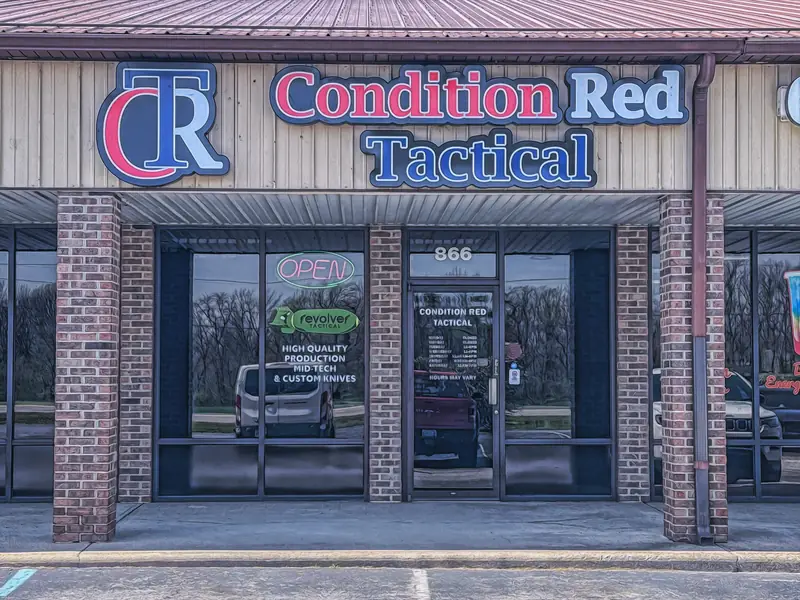
Each dealer sets its own process. We are a Powered by Silencer Shop dealer with an in-store Silencer Shop kiosk, which is free to use with Silencer Shop purchases. See our suppressors page or our guide on buying a suppressor on a 4473 in Indiana.
What is not covered?
- SBRs and SBSs still need a Form 4. Silencer Shop still requires one for short-barreled rifles and shotguns. See SBR and SBS rules for 2026.
- Machine guns and destructive devices are fully regulated as before.
- Suppressors from other sources may still need a Form 4 unless you are covered some other way, such as through membership in a plaintiff group.
- Interstate travel is unsettled. The NRA-ILA notes that the federal rule on moving SBRs and SBSs across state lines still applies. SilencerCo has told customers who buy on a 4473 to keep their suppressors in the state where they bought them until this is clearer.
Should you use a Form 4473 or a Form 4?
For most Indiana buyers who plan to keep the suppressor at home and hunt or shoot here, the 4473 route is faster. If you travel out of state with it often, or you want a federal registration on file, a Form 4 is still an option, and the tax is $0. Our guide on Form 4 vs. Form 4473 walks through the tradeoffs.
Could this change?
Yes. The DOJ could still file before its deadline, Congress could act, and industry groups have asked ATF for written guidance for dealers. The NRA-ILA also points out that anyone relying on the injunction takes some risk if the ruling is later overturned. Check with us before you buy so we can confirm you qualify under the rules in effect that day.
This post is general information, not legal advice. Laws and court orders change. Last checked September 27, 2026.
Common Questions
Has the DOJ officially said it won't appeal the suppressor ruling?
As of September 27, 2026, the reports come from CBS News and others citing sources, not a court filing. The appeal deadline is about October 5, 2026.
Can I buy a suppressor in Indiana without a Form 4?
If you are covered, yes. Silencer Shop says suppressors from Silencer Shop bought in Indiana can transfer on a Form 4473 with a NICS check. Other suppressors may still need a Form 4.
Does the ruling cover short-barreled rifles?
The court order covers SBRs and SBSs, but Silencer Shop still requires a Form 4 for them, and federal rules on taking them across state lines still apply.
Is the NFA tax on suppressors still $200?
No. The tax on suppressors, SBRs, SBSs and AOWs has been $0 since January 1, 2026. Machine guns and destructive devices still carry the $200 tax.
Sources
- Silencer Shop Help Center: NFA Ruling FAQ, How Suppressor Purchases Work Now
- Silencer Shop: The NFA Registration Is Gone (Silencer Shop Foundation v. ATF)
- NRA-ILA: Questions and Answers About the Texas NFA Case
- CBS News: Justice Dept. leaves in place ruling that deregulates silencers, shotguns and certain rifles
- Bearing Arms (Sept. 18, 2026): CBS News reports Trump ordered DOJ not to appeal NFA decision
- SilencerCo statement via The Outdoor Wire: What to Expect When You're Expecting (to Buy a New Suppressor)
This post is general information, not legal advice. Laws and court rulings change; check current law or talk with an attorney about your situation.

David Wasson is the founder of Condition Red Tactical in Greenfield, Indiana. A former Military Police officer, certified gunsmith and lifelong shooter, he runs the shop with his wife Tina, a retired Army Reserve combat medic.