
Oil goes where metal parts rub together as the gun cycles. Look for shiny wear marks after shooting: those are your lube points. Everything else gets, at most, a thin wipe of oil to protect against rust. More oil is not better. Too much attracts dirt and can reach ammunition primers.
The general rule: friction points get lube
- Rails and tracks where a slide or bolt rides
- Locking surfaces such as the barrel hood and lugs on a pistol, or bolt lugs on a rifle
- Pivot and contact points the manual calls out, such as a trigger bar and connector
- Outside steel surfaces get a light wipe for rust protection, not lubrication
Always start with your owner’s manual. Makers design their guns around specific lube points and amounts.
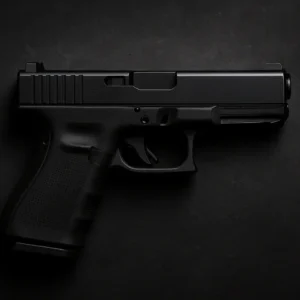
Where to oil a striker-fired pistol (Glock example)
Glock’s manual lists these points:
- Wipe the outside of the barrel, including the barrel hood and lugs, with a lightly oiled patch.
- Wipe the inside top of the slide in front of the ejection port, where the barrel hood rubs, and the opening at the front of the slide where the barrel passes through.
- One drop where the rear of the trigger bar touches the connector.
- One drop spread along the full length of each slide rail cut.
Other striker pistols are similar, but check your manual. Full details are in how to clean a Glock.
Where to oil a hammer-fired or 1911-style pistol
The same logic applies: the frame and slide rails, the barrel where it contacts the slide and bushing, and the locking lugs. A small drop on the barrel link and slide stop pin area is common on 1911 designs. Check your manual for the exact spots.
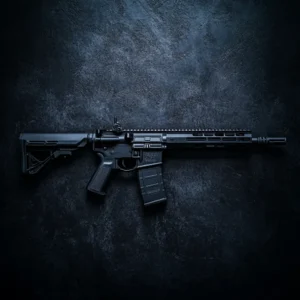
Where to oil an AR-15
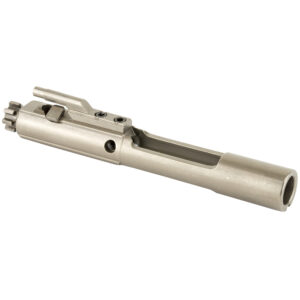
- The bolt body and gas rings
- The cam pin and its slot in the carrier
- The locking lugs
- The shiny bearing surfaces on the outside of the bolt carrier
- The sides and top of the charging handle
An AR-15 generally likes a bit more lube on the bolt carrier group than a pistol needs, but wipe off anything that runs. See how to clean an AR-15.
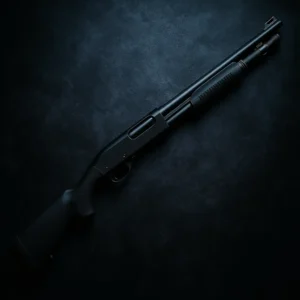
Where to oil a pump or semi-auto shotgun
Mossberg says its pump shotguns need very little lubrication beyond a light oiling of internal and external surfaces, with a few drops of light oil in the receiver tracks that guide the bolt and bolt slide. Lightly oil the action bars and the choke tube threads too. Details are in how to clean a shotgun.
Where to oil a bolt-action rifle or revolver
- Bolt-action: a light film on the bolt body, and a small amount of oil or grease on the rear of the locking lugs and on the cocking cam surface at the back of the bolt.
- Revolver: revolvers need very little. A tiny drop where the manual shows, often around the ejector rod and cylinder crane, and a light wipe on the outside. Keep oil out of the cylinder chambers before shooting.
Where NOT to oil a gun
- The firing pin or striker channel. Glock warns that oil here can contaminate primers and cause a failure to fire, or a bullet stuck in the barrel.
- The breech face. Wipe it dry.
- Magazines. Glock says to wipe magazines dry inside and out. Oil in a magazine collects grit and can reach cartridges.
- The bore and chamber before shooting. Run a dry patch through first.
- Ammunition. Never oil cartridges.
- Optics lenses and wood stocks. Oil can soften wood and smear lenses.
How much oil to use
Think drops, not squirts. One drop on a small contact point, one drop spread along a rail, and a wipe with an oiled patch on larger surfaces. After oiling, cycle the action a few times by hand to spread it, then wipe away anything that pools or drips. Glock says its pistols are designed to work with only small amounts of lubrication. Mossberg notes that many lubricants thicken in cold weather, so go light in winter.
Oil, grease or CLP?
| Product | Best for |
|---|---|
| Gun oil | Most lube points and rust protection. Easy to apply by the drop. |
| Gun grease | High-friction sliding surfaces that shed oil, like some slide rails and bolt lugs. |
| CLP | A one-bottle cleaner, lubricant and protectant. Handy for beginners and range bags. |
Use products made for firearms. General household sprays aren’t designed as firearm lubricants or long-term protectants.
Signs you’re using too much or too little
- Too much: oil spraying back at you when shooting, black sludge on the rails, grit sticking everywhere, sluggish action in cold weather.
- Too little: dry, shiny galling marks on rails, rough or gritty cycling, failures to return fully to battery.
Common Questions
Can I use WD-40 to oil a gun?
It's better to use a gun oil or CLP. Household penetrating sprays are not designed as firearm lubricants or long-term rust protectants.
Should I oil the firing pin?
No, not on a Glock. Glock specifically warns against putting any lubricant in the firing pin channel. Check your own manual for other guns.
Should I oil the inside of the barrel?
Only a very light film for storage. Run a dry patch through before you shoot.
How much oil does a pistol need?
Very little. Glock calls for one drop at the trigger bar and connector and one drop spread along each slide rail cut, plus a light wipe on the barrel contact areas.